Norman Foster was born in Manchester in 1935 into a working-class family. He studied architecture in Manchester and then at Yale — where he met Richard Rogers, with whom he briefly formed Team 4 in the 1960s. His career took off in the 1970s and 1980s with a series of industrial and office buildings in which he took high-tech to a degree of formal refinement that his contemporaries rarely reached. The Sainsbury Centre for Visual Arts in Norwich (1978) is the first manifesto: an industrial shed housing an art museum, with the structure and services integrated into the double skin of the walls instead of being hidden or exposed.
Foster works at very different scales: from the Bilbao metro stations (1995) to Hong Kong International Airport (1998, Chek Lap Kok, built on an artificial island), from the never-built Millennium Tower project in London to the Millau Viaduct in France (2004, the tallest viaduct in the world, with piers emerging from the mist of the Tarn gorges). Scale does not intimidate him — but it does not intoxicate him either.
The Reichstag in Berlin
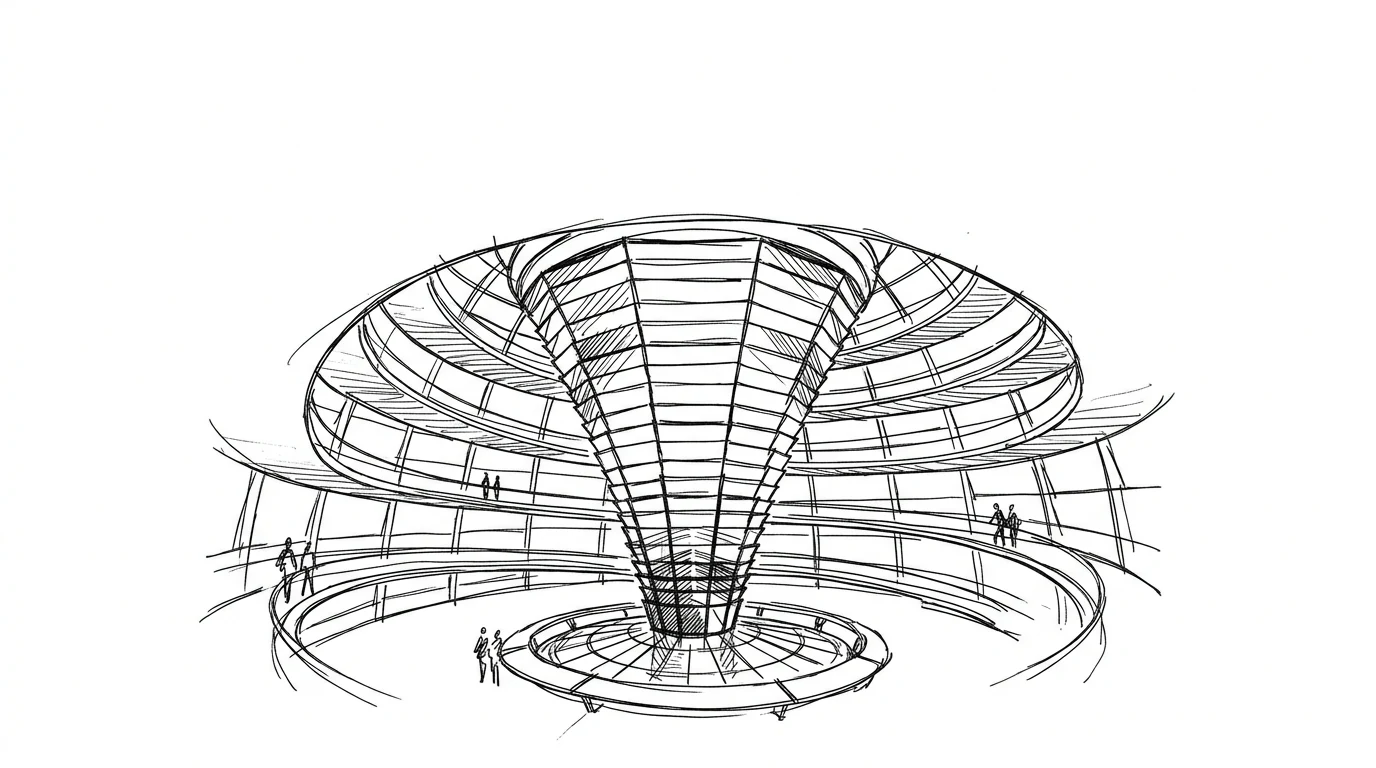
The Reichstag in Berlin is the project that made Foster known to the general public. The original building — built in 1894, burned in 1933, half-destroyed in the Second World War, restored in the 1960s and used as a museum — was chosen as the seat of the reunified German parliament in 1991. Foster won the competition in 1992. The original project envisaged a giant canopy over the whole historic building — it was discarded. The final version is more sober: a glass and steel dome above the parliamentary chamber, with two spiral ramps leading visitors from the entrance to the viewing terrace.
Inside the dome, a cone of mirrors (360 mirrors totalling 54 m²) captures sunlight and refracts it downward into the parliamentary chamber, lighting it with natural light without direct glare. The system also works at night in reverse: the artificial light of the chamber rises toward the dome, which glows from the outside like a lighthouse. It is one of the most elegant natural lighting systems in contemporary architecture — and also a metaphor for a transparent parliament.
The HSBC Hong Kong and London's Gherkin
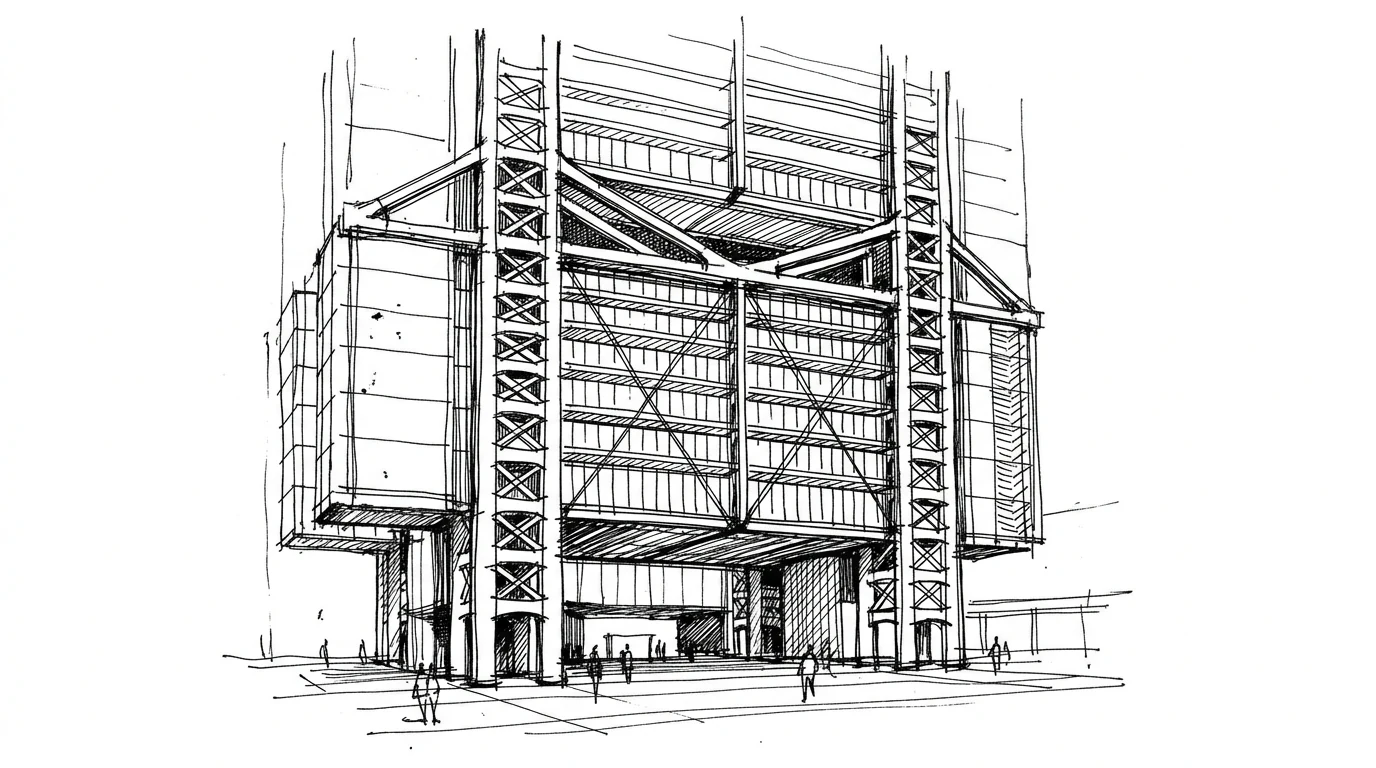
The HSBC Building in Hong Kong (1986) is the building that established Foster's international reputation. The structure is suspended — literally: the 47 floors do not rest on central columns but are hung from two groups of four perimeter mega-columns, with truss beams at regular intervals. This scheme completely frees the ground floor — which in Hong Kong, where land is extremely expensive, is a gesture to be reckoned in terms of property income. Beneath the HSBC there is a covered public space, accessible and crossable. Foster calls it a “covered plaza”, and in a densely built city like Hong Kong it has real urban value.
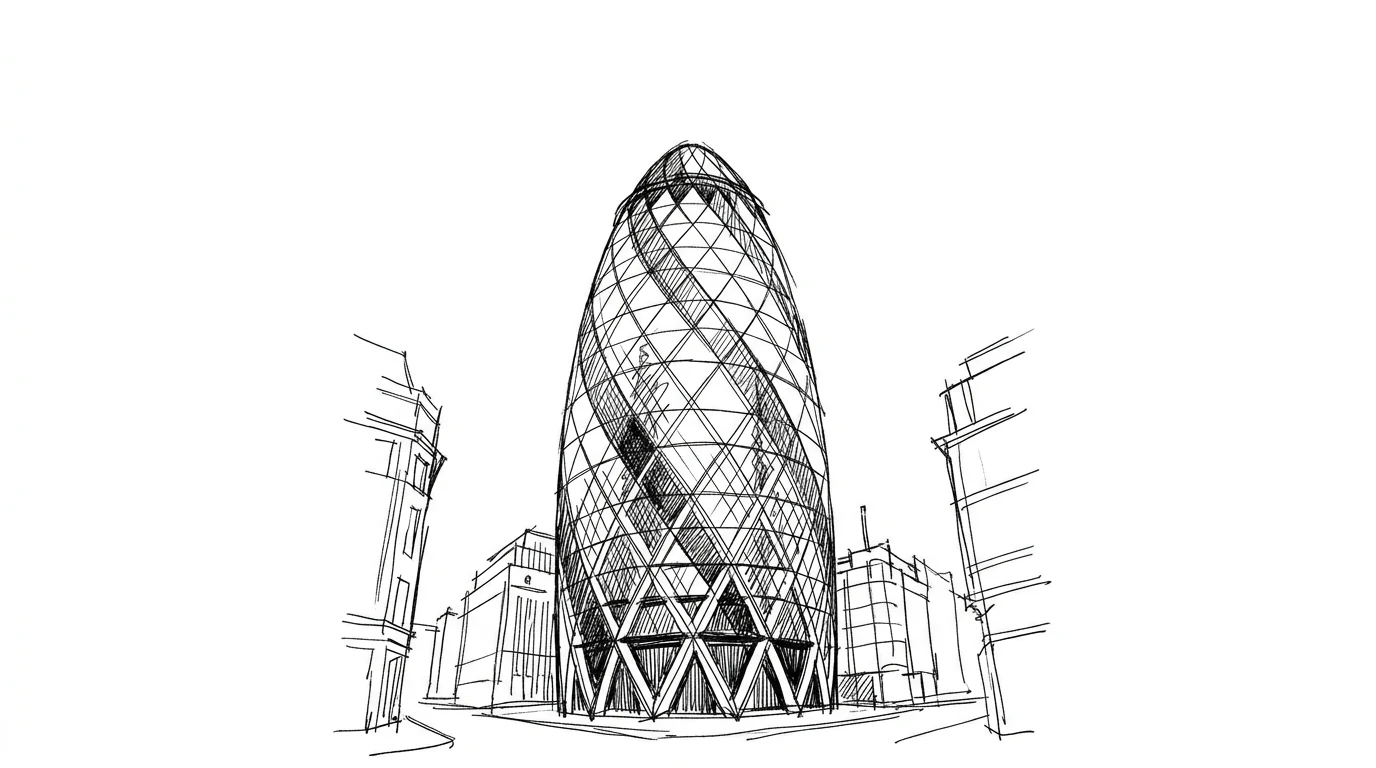
The Swiss Re Building in London (2003) — the “Gherkin” — is a 180-metre skyscraper in the heart of the City that uses a double-curvature geometry to optimise aerodynamics. The non-circular form lets air flow around the building, reducing wind vortices at ground level — a chronic problem of conventional prismatic skyscrapers. The ventilation system uses spiral shafts between the double skins of the façades to bring natural fresh air to the floors without mechanical air conditioning in the intermediate seasons. The form is the result of environmental optimisation, not an aesthetic preference. Foster does not start with “I want it to be a gherkin” — he starts with “how do you reduce the energy consumption of a skyscraper in a windy city”.
Apple Park and the end of high-tech
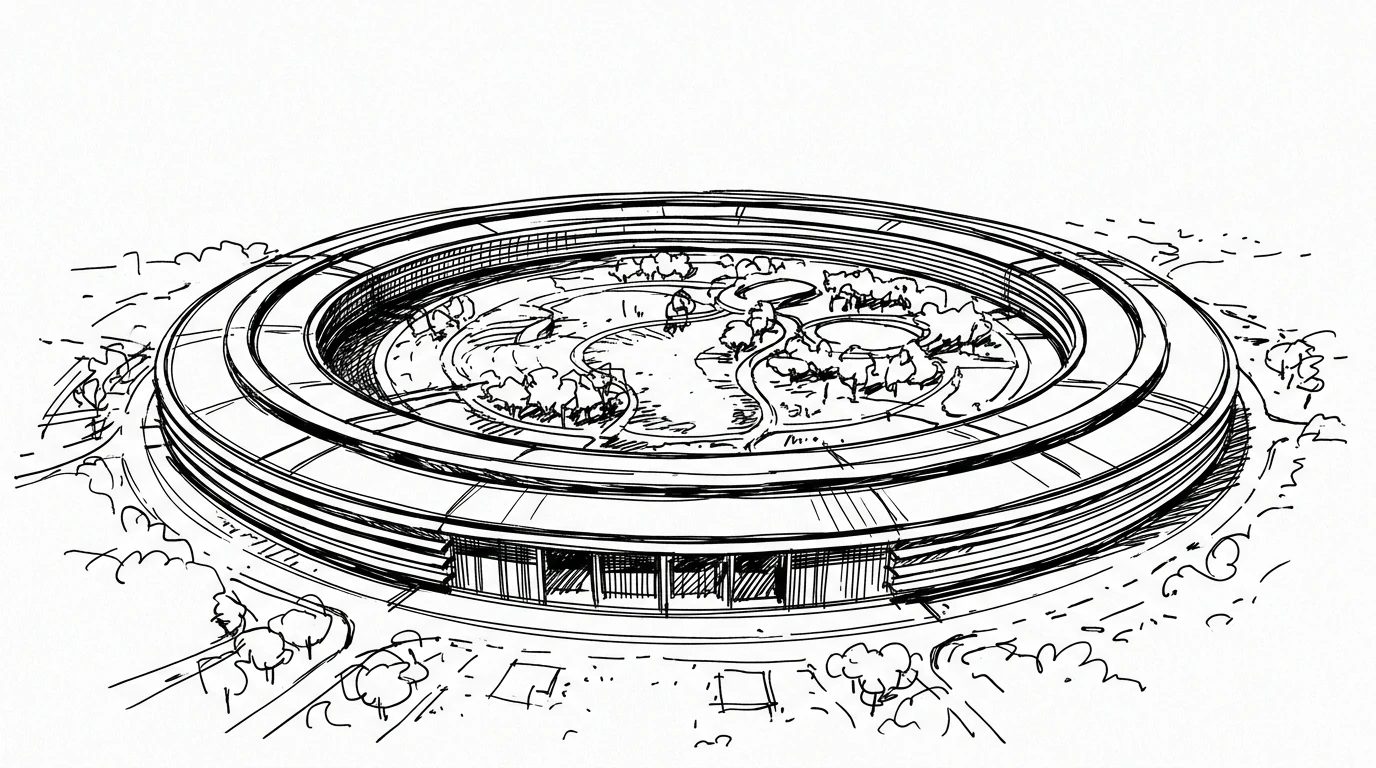
Apple Park in Cupertino (2017), designed with Steve Jobs before his death, is the largest building Foster has ever built: a circular ring of glass and steel 460 metres in diameter housing 12,000 employees in a 70-hectare park. Every glass panel is curved — produced with a specific curvature for each position on the ring, with the precision of aircraft components. It is high-tech taken to the industrial extreme.
But Apple Park also signals the limit of high-tech as a movement: the building is extraordinary as a technical artefact but does not produce a new idea about architecture or the city. The Reichstag dome was high-tech and had a civic argument. The Gherkin was high-tech and had an environmental argument. Apple Park is high-tech and has an unlimitedly rich client. Technology is a means, not an end — but when the means becomes the message, the end disappears.