Rem Koolhaas was born in 1944 in Rotterdam — a city almost entirely destroyed by German bombing in 1940 and rebuilt after the war as a laboratory of modernist architecture. Before studying architecture, he worked as a journalist and wrote screenplays, one of which was produced — De Witte Slavin, 1969, an erotic spy film best forgotten. He went to study at the Architectural Association in London in 1968, then at Cornell University in New York. When he published Delirious New York in 1978, he was thirty-four and had no building constructed.
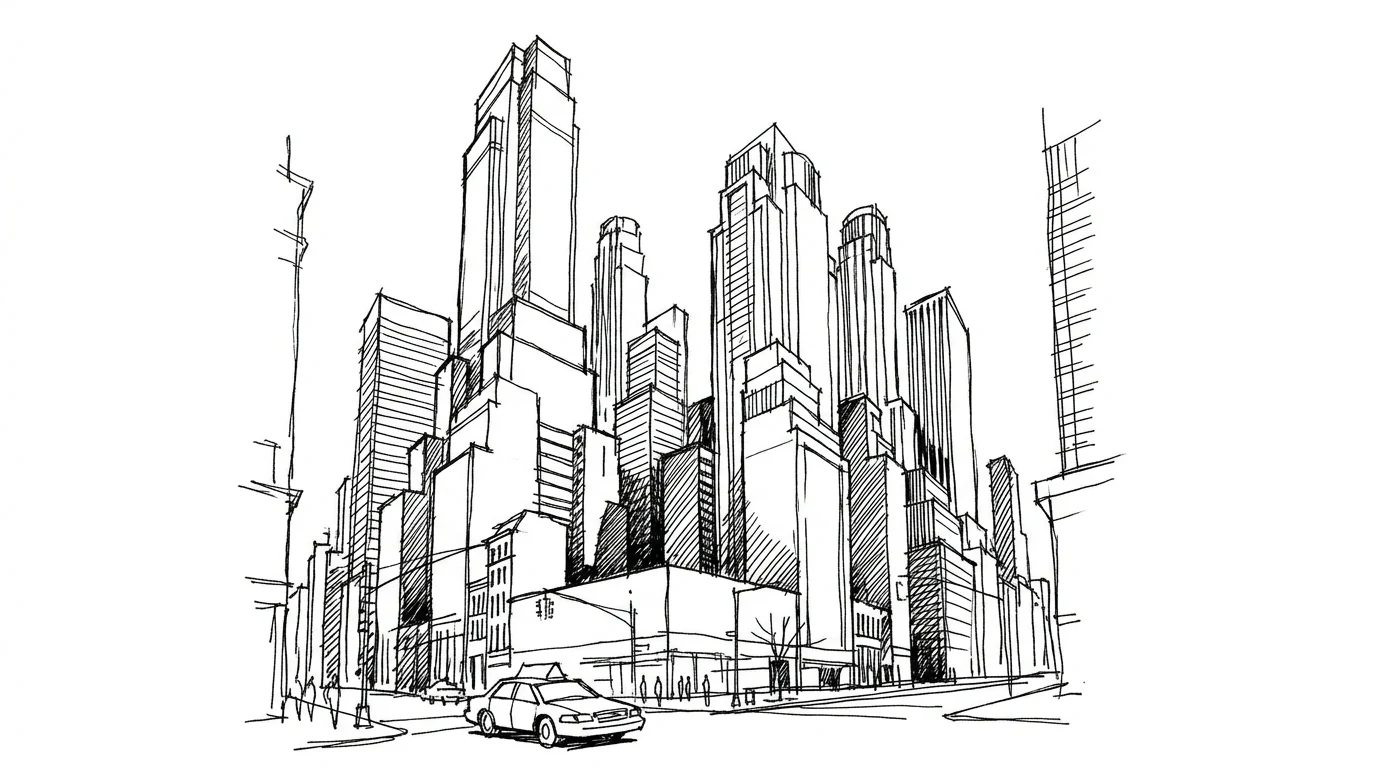
The book is an analysis — and a manifesto disguised as analysis — of Manhattan as a unique cultural phenomenon. The thesis: Manhattan is the place where density, the overlapping of functions, monumental scale and the speed of change produced an architecture that obeys none of the rules of European good taste — and which for that reason is more honest, more powerful, more contemporary than anything Le Corbusier or Mies produced. The New York skyscraper is not rational architecture: it is delirious architecture. And that is exactly why it works.
OMA: Office for Metropolitan Architecture
In 1975, Koolhaas founded OMA — the Office for Metropolitan Architecture — with his wife Madelon Vriesendorp and two colleagues. For years he won competitions and did not build them. His projects were much discussed in the specialist press, but clients, when there were any, often changed their minds. It was only in the 1990s that OMA began to build systematically: the Villa dall'Ava outside Paris (1991), the Nexus Housing in Fukuoka (1991), the building for the Très Grande Bibliothèque in Paris — lost in the competition but influential. The Kunsthal in Rotterdam (1992) is the first building to put his name on the international map.
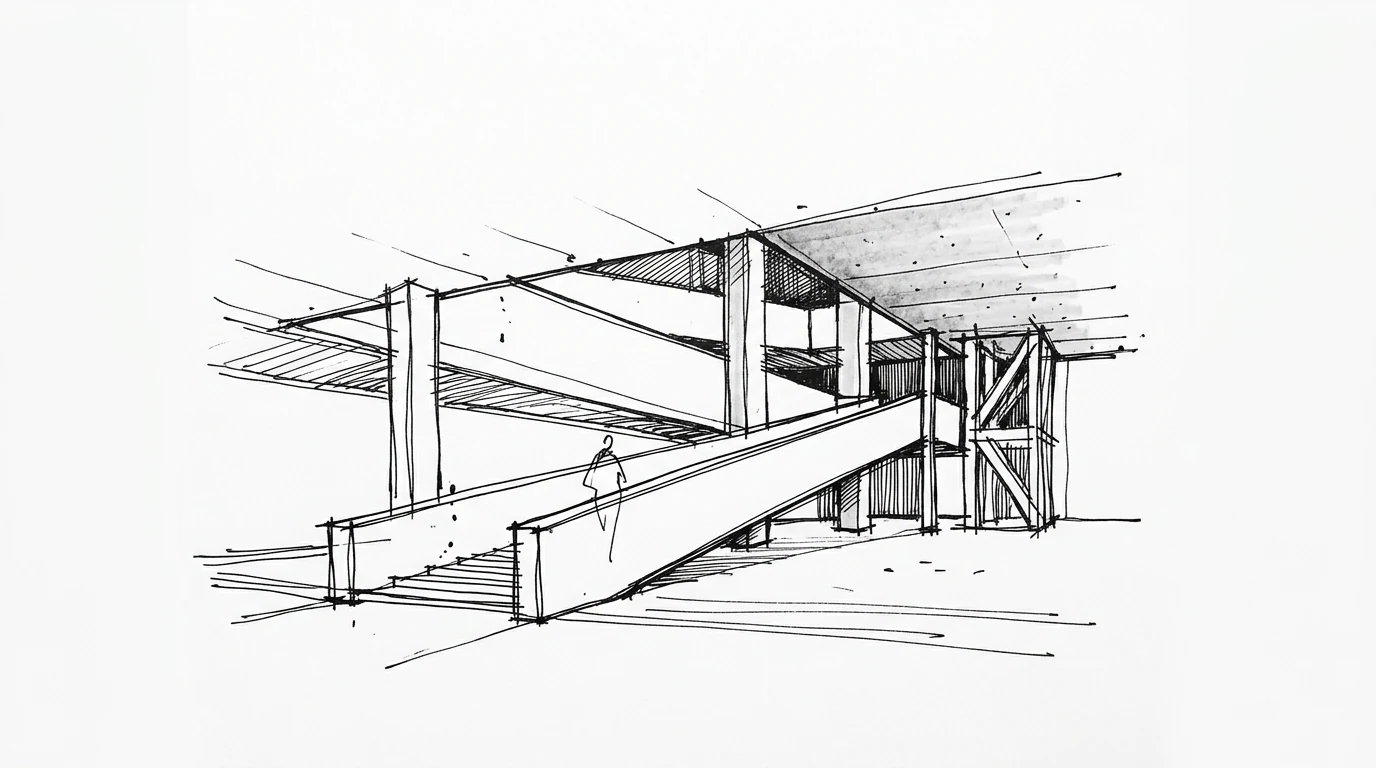
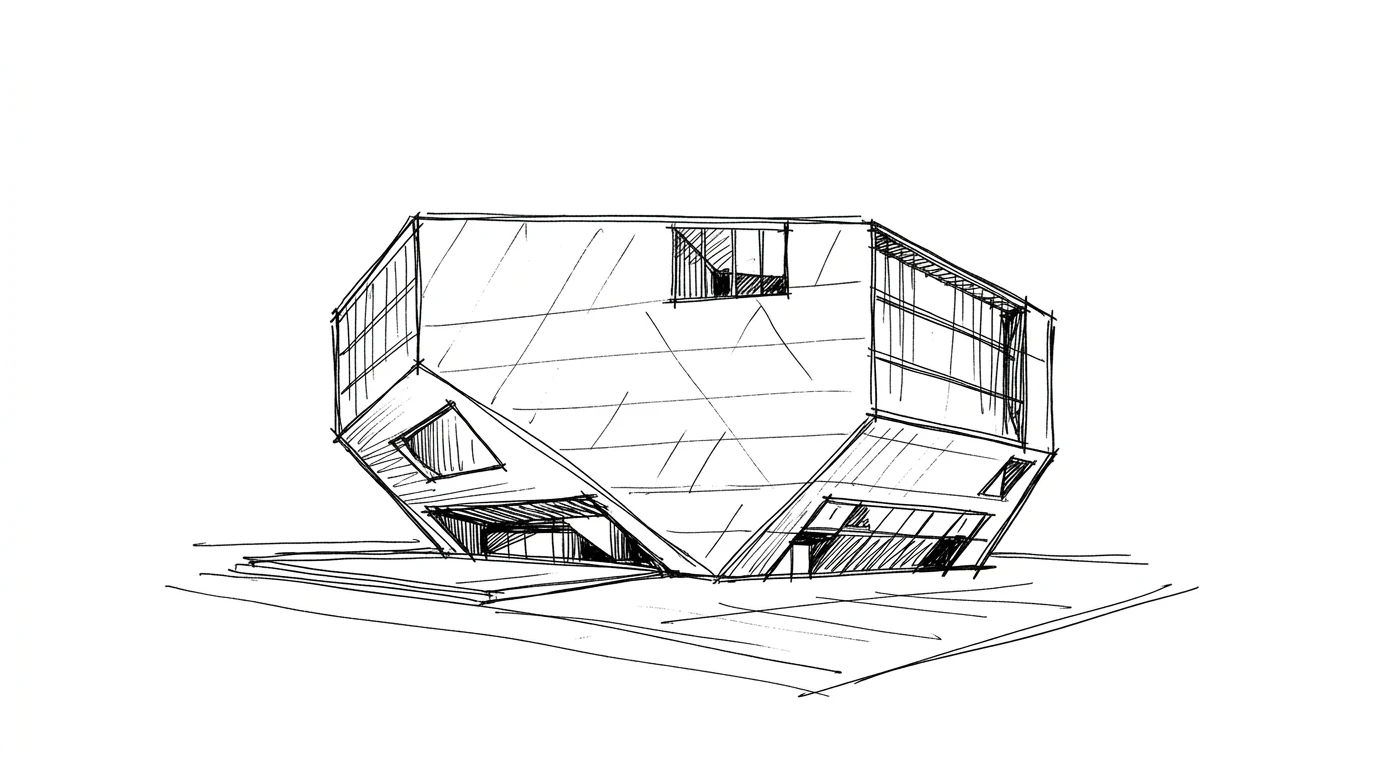
The Kunsthal is an exhibition pavilion with no permanent collection — a neutral space that adapts to any exhibition. The structure is deliberately heterogeneous: piers that change material from one floor to the next, ramps that cross the building diagonally, walls that change from solid to transparent without warning. It is a building that opposes the very notion of stylistic coherence — each part is designed as if by a different architect, and this is deliberate.
Junkspace: the great act of self-criticism
In 2002, Koolhaas published “Junkspace” — a short essay, later translated around the world, which is one of the most widely read texts of architectural theory of the last twenty years. “Junkspace” is the word Koolhaas coined to describe the space produced by contemporary modernisation: shopping malls, airports, hotel lobbies, office atria, pedestrian arcades. Space without memory, without identity, interchangeable, in continuous transformation — not planned but accumulated, not designed but assembled.
The paradox is evident: in those years Koolhaas was building shopping centres and corporate buildings — exactly the typology he was theoretically demolishing. The answer he gave to those who pointed this out was that architecture cannot escape the economic forces that produce it: it can only try to insert within those forces spaces of resistance, moments of unexpected quality. It is not a satisfying answer, but it is at least honest.
The CCTV Tower in Beijing
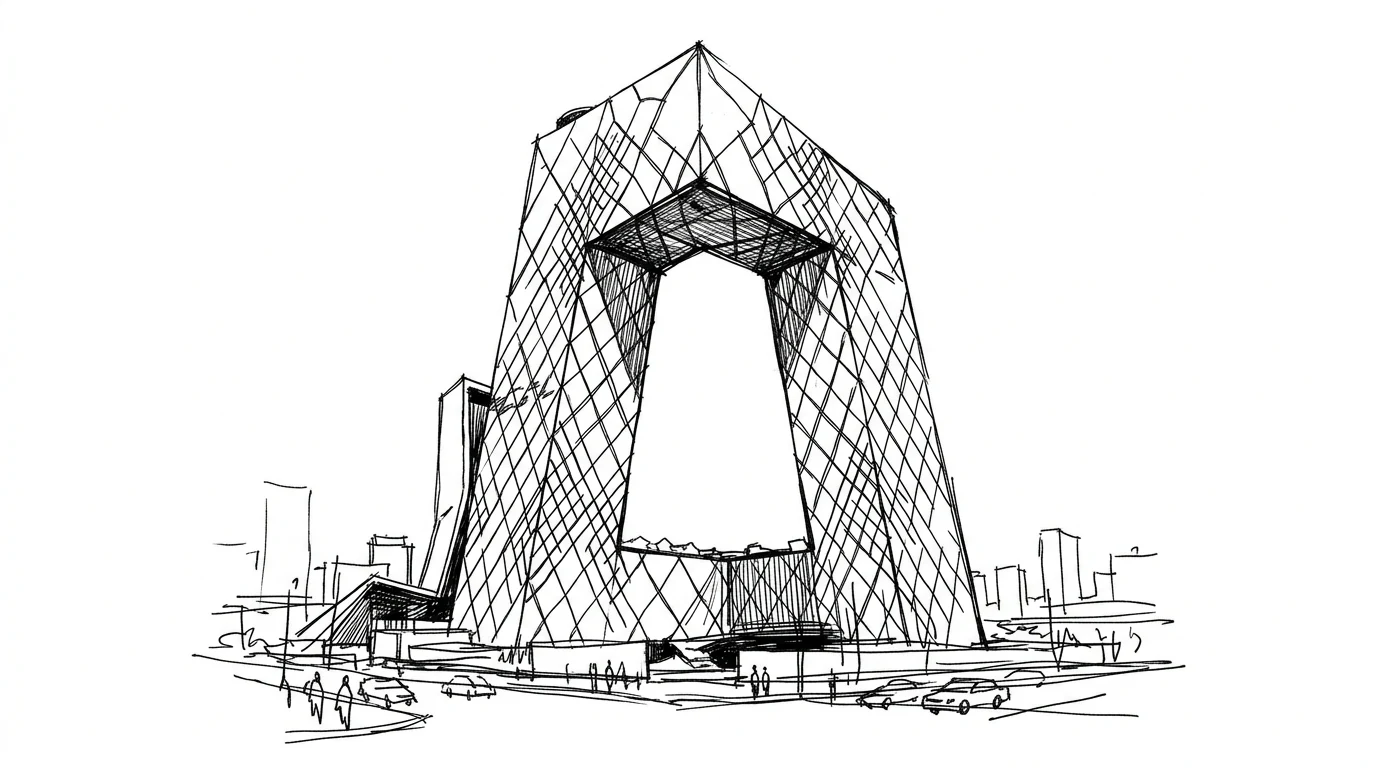
The CCTV Tower in Beijing (2004–2012) — headquarters of Chinese state television — is perhaps the most formally daring building constructed in the twenty-first century. It is not a conventional skyscraper: it is a loop — two inclined towers that meet at the top with two connecting bridges, forming a continuous ring. The load-bearing structure is visible on the outside as an irregular grid that thickens at points of greatest structural stress and widens where forces are lower. It is not decoration: it is the structure becoming façade.
The building has been the subject of controversy both for its form (considered obscene by some — in Chinese it is nicknamed “big underpants”) and because Koolhaas — a progressive European intellectual — agreed to work for the authoritarian Chinese government. Koolhaas's answer, once again, is negotiation: it is better to be inside and have influence than to be outside for moral purity. The argument convinces those who are already convinced and does not convince those who are not.
What remains
Koolhaas matters because he shifted the architectural debate from the project to the territory. Before him, architectural theory discussed buildings — forms, styles, types. Koolhaas brought into architecture the question of the generic city, the periphery, global logistics, infrastructure. He understood that most of the contemporary built environment is not architecture in the traditional sense, and that ignoring this fact means talking about a tiny fraction of reality. It is uncomfortable. It is probably right.