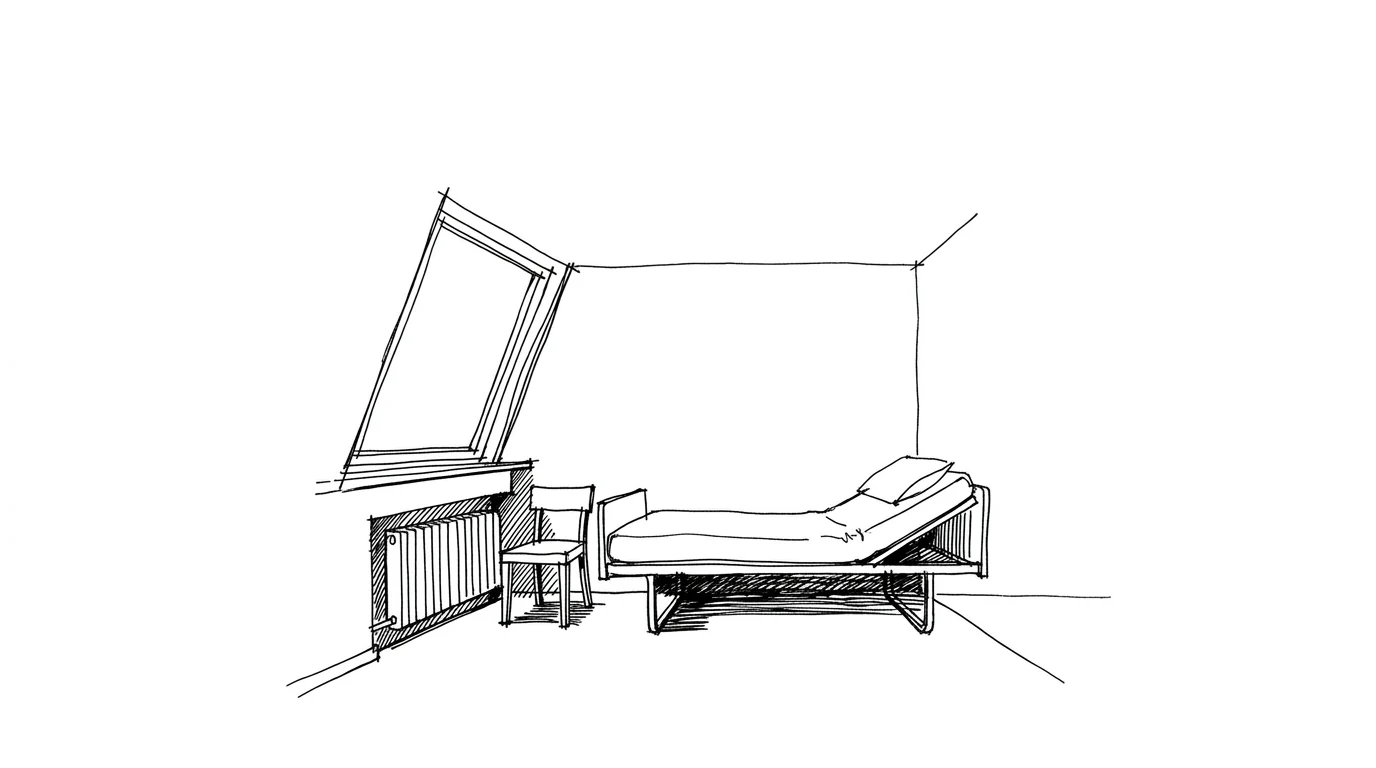
Alvar Aalto is the architect who showed that modernism is not necessarily white, abstract and cold. While Le Corbusier builds Villa Savoye — white, on pilotis, with ribbon windows — Aalto builds at Paimio a sanatorium for the treatment of tuberculosis using reinforced concrete with the same technical confidence as Le Corbusier, but adding something Le Corbusier systematically ignores: attention to the physical and psychological conditions of the specific user. The patient lying in bed looks up: Aalto's window lights the ceiling, it does not dazzle the person lying down. The radiator is designed to heat the air at floor level without creating draughts. The corridors are quiet. The material is concrete, but the project is made for fragile human beings.
This attention is not sentimentality: it is method. Aalto studies user behaviour — how they move, what they see, what they hear — and translates it into precise, verifiable design choices. It is the opposite of the modernist tabula-rasa approach, which cancels the specific user in order to reason about the abstract user. Aalto does not believe in the abstract user.
The Viipuri Library
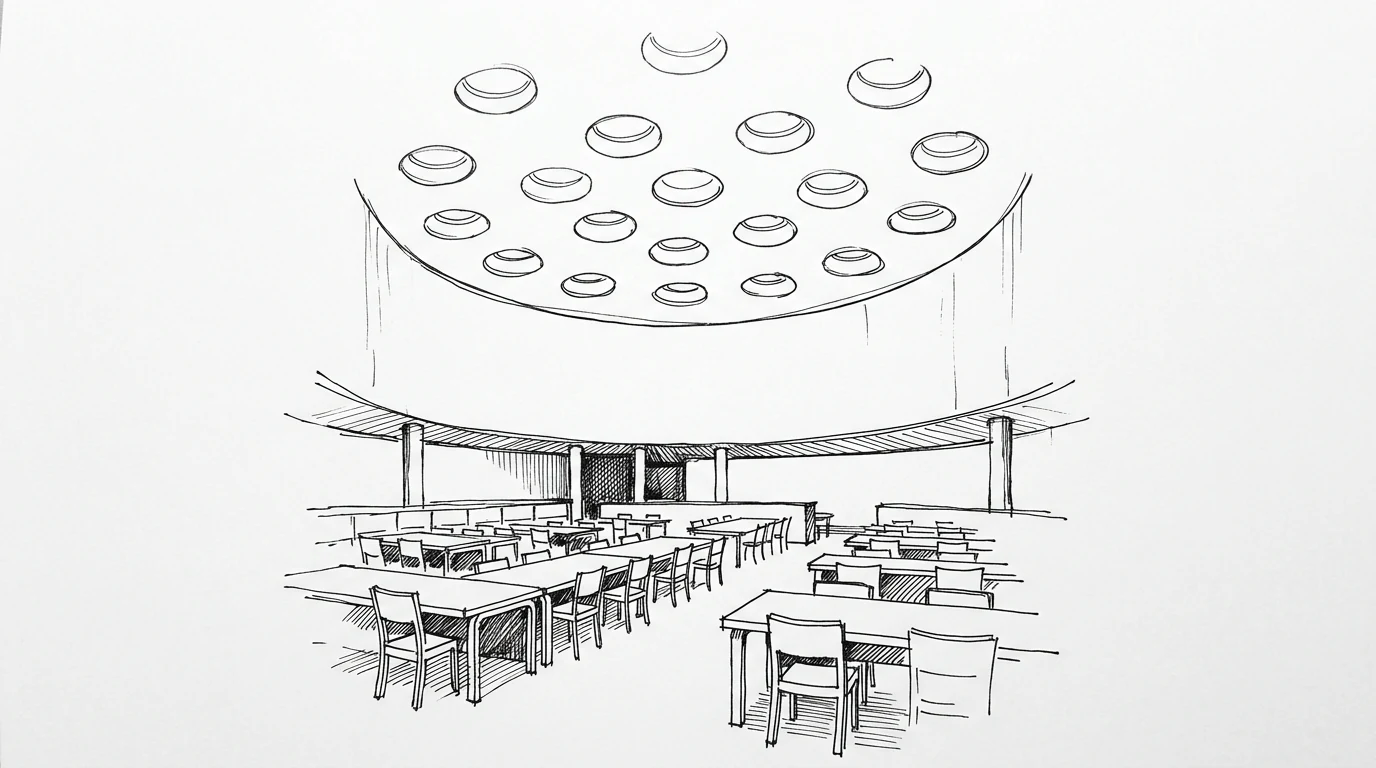
The Viipuri municipal library (today Vyborg, Russia), designed between 1927 and 1935, is the point at which Aalto definitively breaks with modernist orthodoxy. The reading-room ceiling is pierced by circular, funnel-shaped conical skylights — 57 in all — that distribute natural light uniformly and diffusely without creating sharp shadows or glare. It is an elegant technical solution and a unique spatial result: the room seems lit from within, with no visible direct light source.
The lecture hall has an undulating wooden ceiling — one of Aalto's first non-structural curvilinear surfaces — designed to improve the acoustics. The curve is not decoration: it is functional geometry. But it also produces a warm, almost biological visual effect that anticipates the organic forms of later years. Viipuri is the laboratory where Aalto discovers that the curve can do things the rectangle cannot.
Wood as a modern material
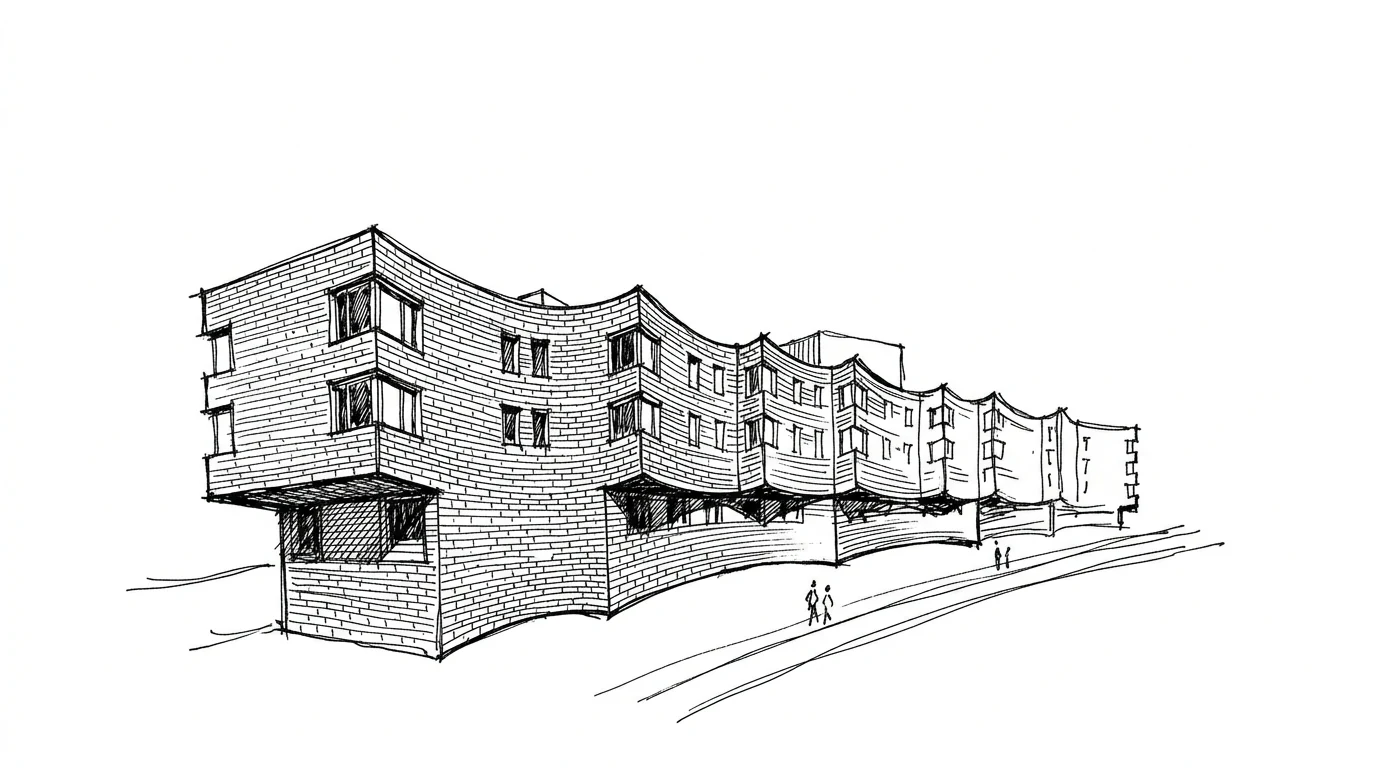
Aalto uses wood as a modern architectural material — not as vernacular nostalgia but as a technical response to specific conditions. The bent laminated wood he patented in 1933 (the Paimio chair, produced by Artek) is not “traditional” wood: it is an industrial material produced with steam-forming techniques developed specifically. Aalto transfers the same logic to architecture: wood bent with steam or hot pressing becomes a structural and formal material with possibilities that steel and concrete do not have.
This approach to materials — using them for what they can do, not for what they mean culturally — is one of Aalto's most lasting contributions to modernism. While many architects of the Modern Movement treated concrete as the material of the future and wood as the material of the past, Aalto treated both as tools with different capabilities, to be used according to the situation.
The light of the North
The light of Finland is different from that of Provence or Egypt: it is oblique for much of the year, low on the horizon, varying between the midnight sun in summer and near total darkness in winter. Aalto designs for this specific light. His circular skylights, his high windows, his natural-light reflectors are a response to a real problem: how to bring natural light deep into a building when the sun is low and the day is short.
This climatic specificity is exactly the opposite of the internationalist modernism that Gropius and Mies export to the United States in the 1940s: an architecture that works equally well — or equally badly — in Chicago and in Singapore. Aalto proposes an architecture that starts from specific local conditions and transforms them into formal opportunities. It is not regionalism or nostalgia: it is intelligent adaptation.